
How Co-Pilot Psychiatric Decision Support Can Transform Inpatient Psychiatry

Inpatient psychiatry has always been an intense, high-pressure environment where clinicians must make crucial decisions quickly, often with limited information. Patients admitted to psychiatric units tend to present with high acuity symptoms—such as psychosis, mania, suicidal ideation, aggression, or severe withdrawal—requiring rapid assessment and stabilization. Psychiatrists must manage these crises while also coordinating with nursing teams, social workers, internal medicine, and hospital administration. Each decision carries significant clinical, legal, and safety implications. The workload is further complicated by the unpredictable nature of psychiatric admissions, fluctuating census numbers, and the ever-increasing complexity of patient presentations.
Compounding these challenges is the substantial administrative burden placed on clinicians. Admission notes, daily progress documentation, medication rationale, legal paperwork, treatment plans, and discharge summaries consume several hours each day. Much of this documentation is repetitive or clerical in nature, yet essential for regulatory compliance. As a result, psychiatrists often struggle to dedicate sufficient time to direct patient care because they must focus heavily on meeting documentation requirements. With rising patient loads and national staffing shortages, the strain on inpatient psychiatrists has become more severe than ever. This is where Co-Pilot psychiatric decision support can dramatically change workflow efficiency, improve accuracy, and enhance patient outcomes.
High acuity, polypharmacy, and documentation overload
Inpatient psychiatric units frequently manage patients with multiple psychiatric diagnoses, chronic medical illnesses, and extensive medication histories. Polypharmacy is not only common—it is often unavoidable. Patients may arrive on complex combinations of antipsychotics, mood stabilizers, antidepressants, benzodiazepines, and medical medications. Determining what to discontinue, what to continue, and what to adjust is a time-sensitive task that requires deep clinical knowledge and careful review. Missing a drug interaction, duplicating therapy, or misunderstanding a patient’s medication history can lead to serious consequences.
Documentation adds another layer of pressure. Each patient requires thorough, legally compliant notes every day. Psychiatrists must explain medication decisions clearly, justify level of care, address safety concerns, and communicate with the treatment team. Many clinicians report spending more time documenting than interacting with patients—an imbalance that affects both clinician satisfaction and patient care quality. Co-Pilot can significantly reduce these burdens by analyzing patient histories, flagging medication risks, generating detailed clinical notes, and helping prioritize clinical tasks. With Co-Pilot support, psychiatrists can focus more on treatment and less on paperwork.
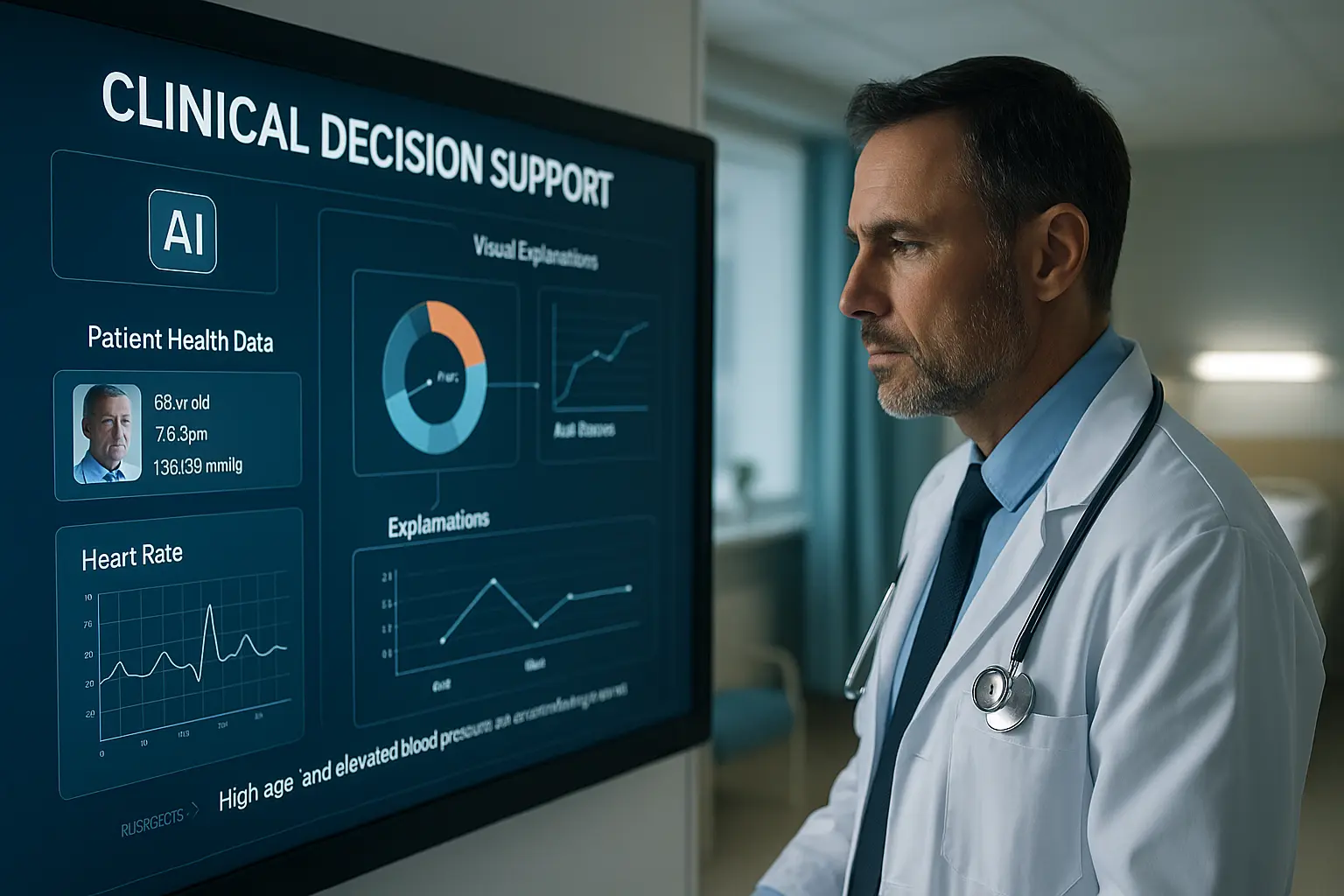
What Is Co-Pilot Psychiatric Decision Support?
Co-Pilot psychiatric decision support refers to advanced, data-driven tools that help clinicians make faster, safer, and more informed decisions. These tools analyze clinical data—symptoms, medication lists, histories, lab results, imaging, and patient-reported information—to offer evidence-based recommendations. They do not replace clinicians; rather, they enhance clinical judgment by sorting through vast amounts of information instantly.
In the inpatient psychiatry setting, Co-Pilot can solve several major challenges. It can rapidly compile fragmented data from previous hospitalizations, summarize complex medical histories, flag medication interactions, and predict potential clinical risks. Co-Pilot tools equipped with natural language processing can also generate drafts of admission notes, progress notes, and discharge summaries. This supports clinicians by reducing the time spent on repetitive tasks while increasing accuracy. As the demand for inpatient psychiatric care continues to rise, these tools are becoming essential components of modern clinical practice.
Core capabilities
Co-Pilot psychiatric decision-support systems typically offer three primary capabilities:
- Diagnostic support
Co-Pilot reviews symptoms, timelines, comorbidities, past diagnoses, and medical data to suggest possible differentials. For new admissions with unclear histories, this feature can significantly speed up diagnostic formulation. - Medication and treatment guidance
Using clinical guidelines, population-level treatment data, and medication interaction databases, Co-Pilot can provide evidence-based medication suggestions. It also identifies safety risks, duplicate therapies, metabolic concerns, QT prolongation risks, and interactions with medical medications. - Documentation assistance
Co-Pilot can draft structured documentation including admission notes, progress notes, treatment plans, and discharge summaries. Clinicians simply review and edit as needed. This reduces hours of writing and ensures consistent, compliant documentation.
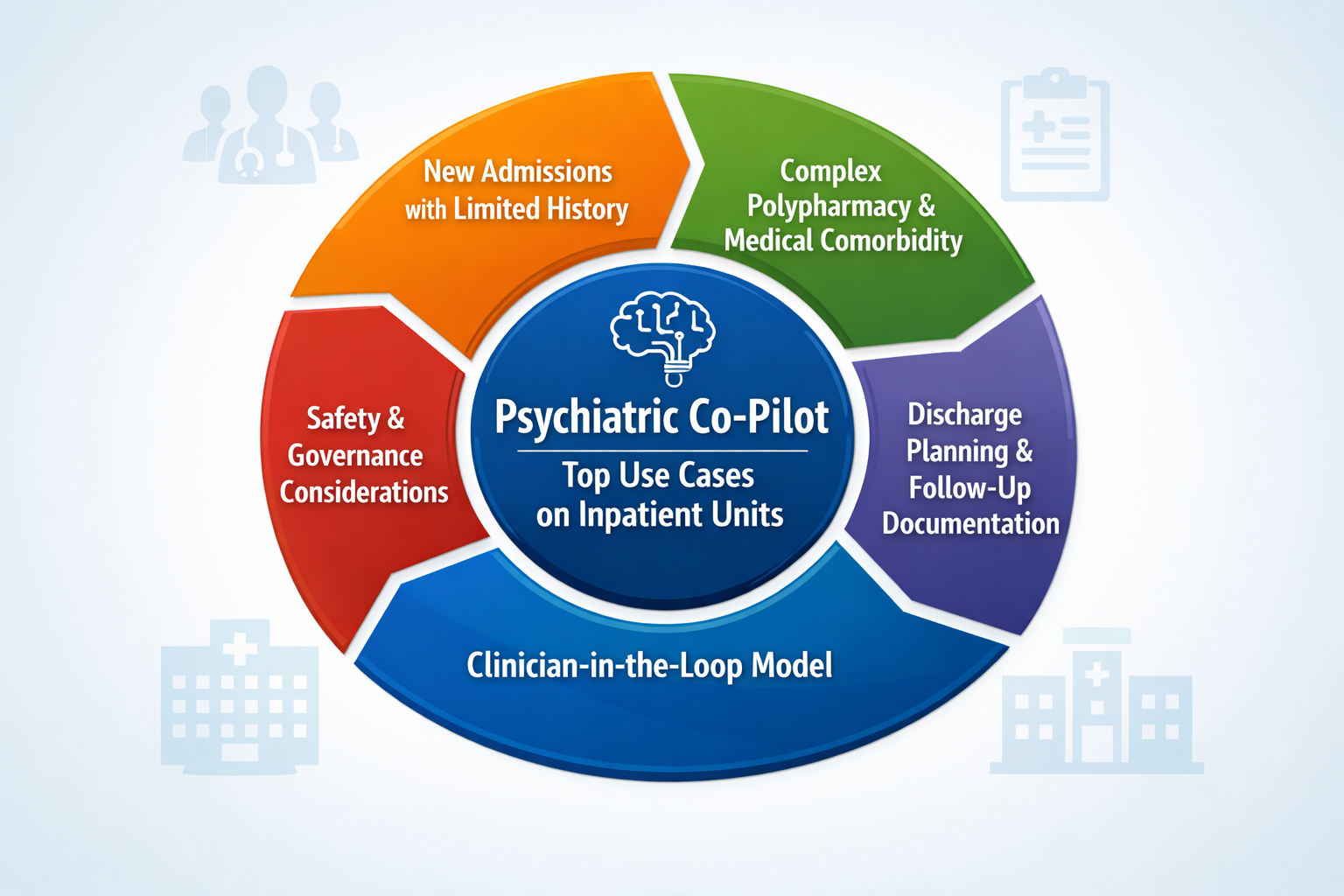
Top Use Cases on Inpatient Units
Co-Pilot psychiatric decision support is especially powerful in inpatient settings where clinicians face time-critical decisions and unpredictable workloads. Below are the areas where Co-Pilot delivers the greatest impact.
New admissions with limited history
New admissions are among the most challenging scenarios for inpatient psychiatrists. Patients may arrive agitated, confused, sedated, or unable to provide an accurate history. Co-Pilot can quickly analyze existing records, past hospitalization data, medication lists, and diagnostic patterns to create an organized clinical snapshot. This allows clinicians to stabilize patients more quickly and avoid delays caused by missing information.
Complex polypharmacy and medical comorbidity
Inpatient psychiatrists treat many patients with co-occurring psychiatric and medical illnesses. Conditions like diabetes, hypertension, renal disease, substance use disorders, and cardiovascular issues compound medication risks. Co-Pilot tools can cross-check all current medications, identify potential interactions, highlight medical contraindications, and recommend safer alternatives. This reduces the risk of medication errors—a common and serious issue in inpatient psychiatry.
Discharge planning and follow-up documentation
Discharge summaries are time-consuming but essential. They must include diagnoses, treatment courses, medication rationale, risk assessments, and follow-up plans. Co-Pilot dramatically simplifies this process by synthesizing clinical notes and progress data into a complete, accurate summary in seconds. This ensures patients receive consistent, high-quality discharge documentation and helps reduce the administrative burden on clinicians.
Safety and Governance Considerations
While Co-Pilot brings tremendous benefits, safety and governance must remain top priorities. Co-Pilot tools must adhere to health privacy laws, maintain accurate clinical logic, and operate within a framework that ensures responsible, clinician-supervised use. Hospitals should establish protocols for Co-Pilot adoption, including training, data governance, audit processes, and clear guidance on how AI-generated content is reviewed.
Co-Pilot should always be used to support—not replace—clinical expertise. In psychiatric care, where empathy, clinical judgment, and human understanding are essential, the clinician must remain the final decision-maker.
Clinician-in-the-loop model
The clinician-in-the-loop approach is the safest and most appropriate model for Co-Pilot in psychiatric care. The Co-Pilot generates recommendations or documentation drafts, and the clinician verifies and finalizes them. This protects patient safety, maintains clinical autonomy, and ensures that the Co-Pilot acts as a partner rather than a substitute. With the clinician in full control, the use of Co-Pilot becomes both safe and highly effective.
How OnDemand Psych Fits Into Inpatient Workflows
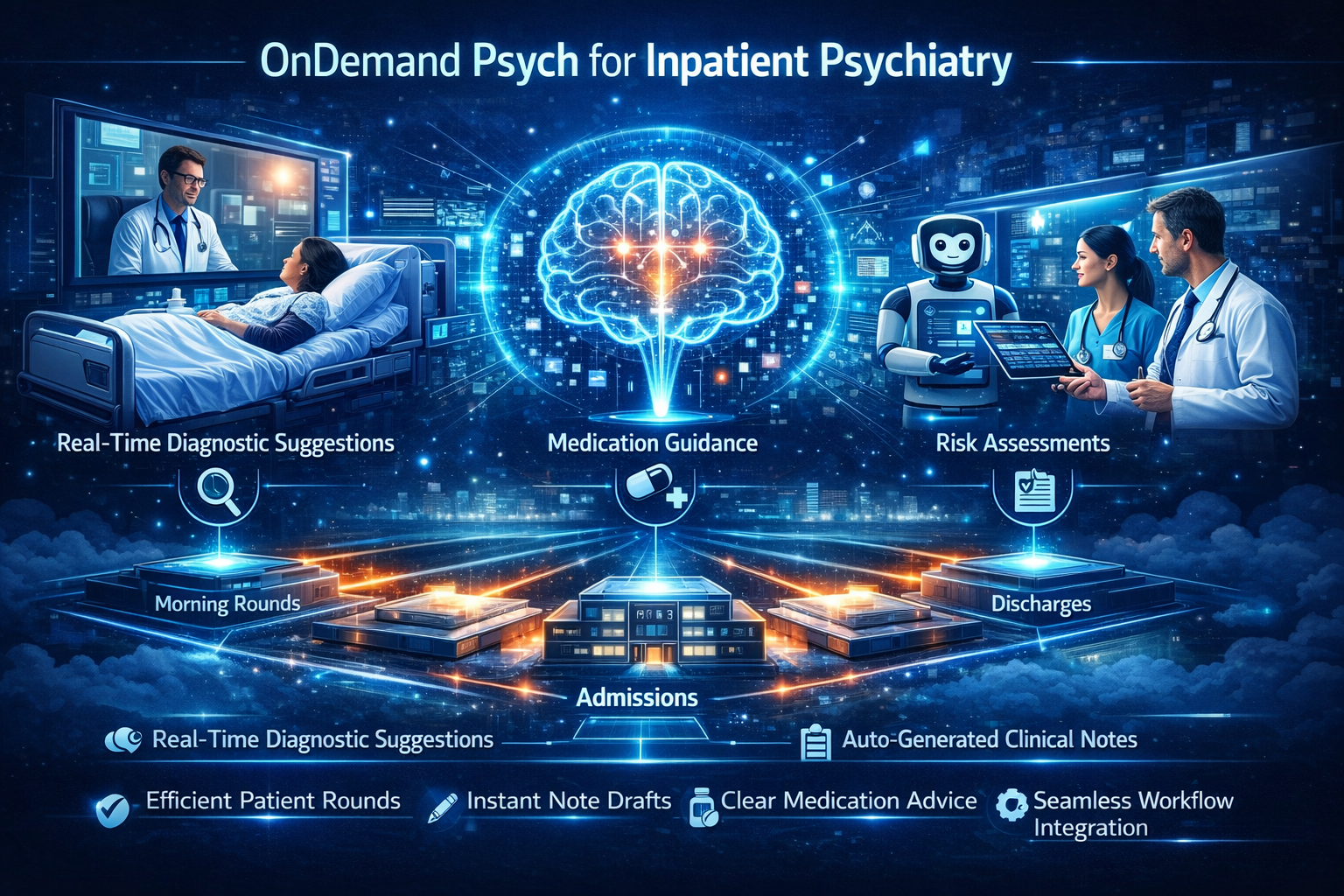
OnDemand Psych is uniquely designed for inpatient psychiatry and supports clinicians at every stage of the inpatient care workflow, from admission through discharge. It provides real-time diagnostic suggestions, medication guidance, structured risk assessments, and auto-generated clinical documentation, helping clinicians make timely, evidence-based decisions in high-acuity environments. During morning rounds, OnDemand Psych can surface overnight clinical changes, highlight emerging safety risks (such as agitation, suicidality, or medication side effects), and assist with rapid progress note creation—supporting more efficient team communication and care planning. For new admissions, the platform can instantly generate comprehensive admission note drafts by synthesizing available clinical data, reducing documentation delays and improving consistency across providers. At discharge, it prepares structured summaries that capture diagnoses, medication adjustments, risk assessments, and follow-up recommendations, supporting safer transitions of care and continuity with outpatient providers. Its medication decision-support engine is particularly valuable in managing complex polypharmacy cases common in inpatient psychiatry. The system helps clinicians identify potential drug–drug interactions, contraindications, cumulative side-effect burden, and guideline-aligned treatment options, supporting safer prescribing and reducing the risk of adverse events. Designed to integrate smoothly into existing inpatient workflows and clinical systems, OnDemand Psych enhances efficiency, documentation quality, and patient safety—making it a powerful clinical support tool for inpatient units facing increasing complexity and care demands.
Getting Started With Co-Pilot on Your Unit
Integrating Co-Pilot psychiatric decision support within an inpatient unit begins with a structured assessment of workflow bottlenecks—such as delays during admissions, documentation burden, medication reconciliation challenges, or discharge inefficiencies. Once key priorities are identified, hospitals can implement Co-Pilot through a phased rollout, allowing clinicians to adopt the tool gradually without disrupting existing clinical operations or care delivery. Targeted training sessions ensure clinicians understand how Co-Pilot functions, how its insights support (rather than replace) clinical reasoning, and how to operate within a clinician-in-the-loop framework that preserves accountability and safety. Early adoption phases typically focus on high-impact use cases, such as progress notes, admission documentation, and medication safety checks, before expanding to broader decision-support capabilities. Within a relatively short adoption period, inpatient units often observe meaningful reductions in administrative workload, improved diagnostic clarity, more efficient medication management, and greater consistency in clinical documentation across providers. As inpatient psychiatry continues to face rising patient acuity and workforce strain, integrating Co-Pilot decision-support tools is increasingly becoming essential for sustaining high-quality, safe, and scalable psychiatric care.
Conclusion
Co-Pilot psychiatric decision support has the potential to transform inpatient psychiatry by addressing some of its biggest challenges—complex cases, medication risks, documentation overload, and unpredictable patient flow. By supporting clinicians with diagnostic insights, medication safety tools, and automated documentation, Co-Pilot enhances patient care while significantly reducing cognitive burden and burnout among providers. Platforms like OnDemand Psych demonstrate how Co-Pilot can integrate seamlessly into inpatient workflows, aligning with existing clinical processes rather than disrupting them. This integration improves safety, consistency, and efficiency across multidisciplinary teams, even in high-acuity and fast-paced environments. As mental health demands continue to rise and inpatient units face increasing pressure to deliver timely, high-quality care, Co-Pilot serves as a critical enabler of scalable, evidence-based psychiatric practice. Looking ahead, the adoption of Co-Pilot in inpatient psychiatry will not only support clinicians but also strengthen system-wide reliability, patient outcomes, and standards of care—making it an essential component of modern psychiatric services.
FAQs
1. What is Co-Pilot psychiatric decision support?
Co-Pilot psychiatric decision support is an AI-enabled clinical assistance technology designed to support psychiatrists in complex care environments. It analyzes structured and unstructured clinical data—such as patient histories, assessments, medications, and progress notes—to provide evidence-based insights for diagnosis, treatment planning, medication management, and clinical documentation. The goal is to enhance accuracy, consistency, and efficiency in psychiatric decision-making.
2. How can Co-Pilot support inpatient psychiatrists?
In inpatient settings, psychiatrists manage high-acuity patients with limited time and fragmented information. Co-Pilot helps by summarizing complex psychiatric and medical histories, identifying potential diagnostic considerations, highlighting clinical risks, and streamlining documentation. By reducing administrative burden and cognitive overload, Co-Pilot allows clinicians to focus more on direct patient care and timely decision-making.
3. Does Co-Pilot replace clinical judgment?
No. Co-Pilot is designed as a clinical support tool—not a replacement for psychiatric expertise. All recommendations and insights generated by Co-Pilot are meant to assist clinicians, who retain full responsibility for diagnosis, treatment decisions, and patient outcomes. Clinical judgment, experience, and patient-specific context remain central to care delivery.
4. Is Co-Pilot safe for inpatient psychiatric care?
Yes, when implemented responsibly. Co-Pilot operates within a clinician-in-the-loop framework, meaning clinicians review, validate, and approve all outputs. It is built to align with established clinical guidelines, institutional protocols, and governance standards. This approach ensures safety, accountability, and ethical use in high-risk inpatient psychiatric environments.
5. How does Co-Pilot help manage polypharmacy?
Polypharmacy is common in inpatient psychiatry due to comorbid conditions and treatment complexity. Co-Pilot assists by flagging potential drug-drug interactions, contraindications, duplications, and dosing concerns. It also helps clinicians review medication histories more efficiently, supporting safer prescribing practices and reducing the risk of adverse drug events.